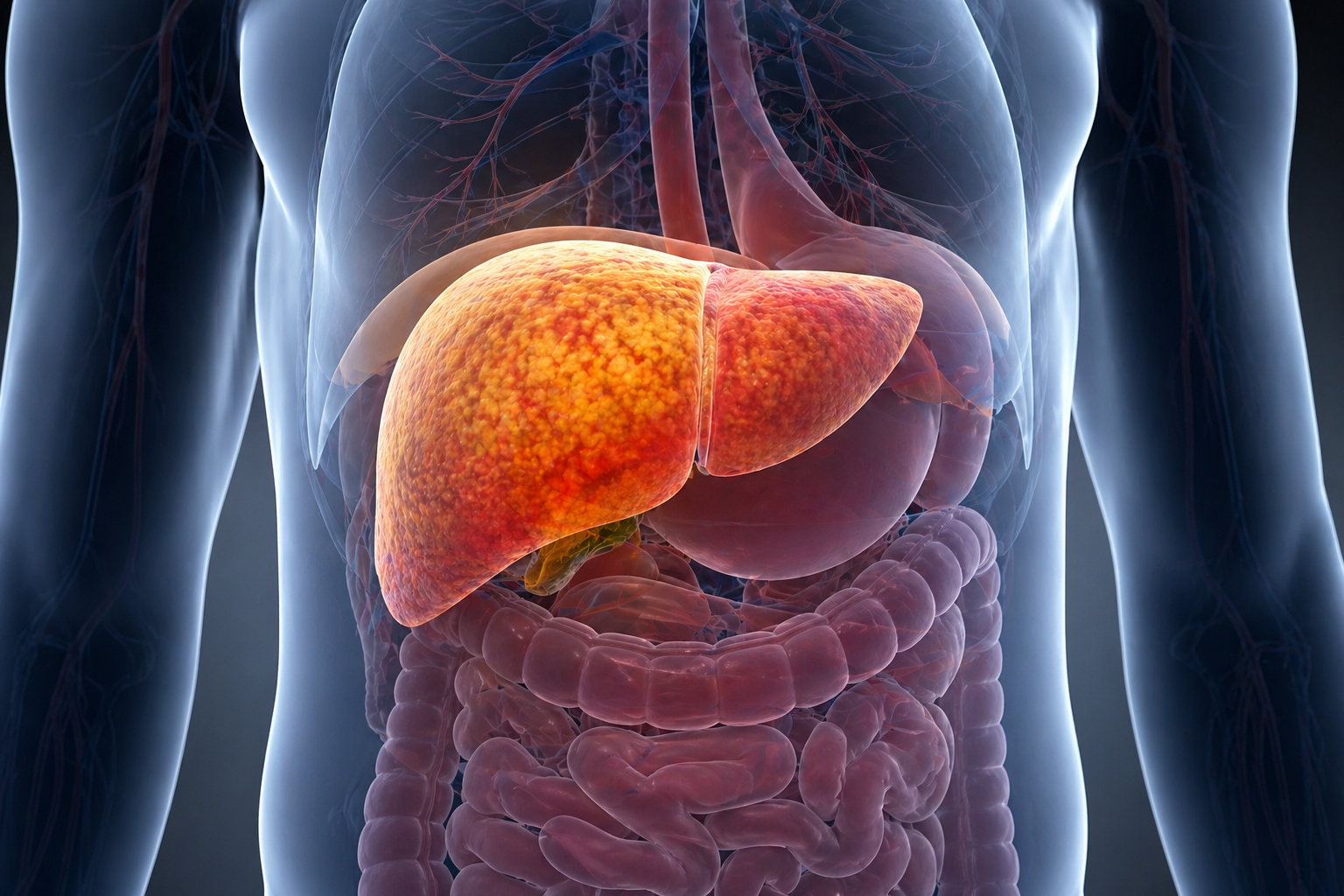
No Symptoms, Real Risk: The Truth About Fatty Liver
You may feel perfectly healthy, going about your daily routine without any noticeable symptoms, with everything seemingly under control. Then, during a routine check-up, you discover fat buildup in your liver. Naturally, this raises an important question: can fatty liver disease really develop without pain or clear warning signs?
The answer is yes. In many cases, the condition begins years earlier and progresses gradually without drawing attention. This is what makes fatty liver disease particularly concerning; it can advance silently until it reaches more advanced stages that are more difficult to manage.
This article explores how fatty liver disease develops, why it often remains symptom-free, the stages it goes through, and the most effective ways to detect and manage it early.
Why Is Fatty Liver Called a Silent Disease?
Fatty liver disease occurs when excess fat accumulates within liver cells beyond normal levels. It is commonly divided into two main types:
- Non-alcoholic fatty liver disease (NAFLD): Commonly associated with metabolic conditions such as obesity and type 2 diabetes. It often causes no symptoms in its early stages and is frequently discovered incidentally during routine tests.
- Alcohol-related fatty liver disease: Develops as a result of excessive alcohol consumption and may worsen over time with continued exposure.
The condition is described as silent because it can progress for years without obvious symptoms, even as significant changes are taking place inside the liver.
What Happens Inside the Liver?
Fatty liver disease is not simply about fat accumulation, it reflects a deeper metabolic problem.
The process often begins with insulin resistance, where the body becomes less effective at using insulin. As a result, more fat is stored in liver cells. Over time, this fat can trigger inflammation and oxidative stress, leading to gradual damage to liver tissue.
Despite these changes, the liver continues to perform its vital functions efficiently for a long time. This ability to compensate explains why symptoms are often absent in the early stages.
Stages of Fatty Liver Disease Progression
Stage 1: Simple Fatty Liver (Steatosis)
At this stage, fat makes up more than 5% of the liver without significant inflammation or cell damage. There are typically no symptoms, and the condition may remain undetected for years.
It is often linked to everyday habits such as:
- High intake of sugar and sweetened beverages.
- Frequent consumption of processed foods.
- Physical inactivity.
Most individuals feel completely normal during this phase.
Stage 2: Steatohepatitis
At this point, the liver starts reacting to fat accumulation. Inflammation develops, and mild liver cell damage may occur.
Some individuals may notice subtle symptoms, such as:
- Fatigue.
- Mild discomfort in the upper right abdomen.
These signs are often overlooked or attributed to other causes, which can delay diagnosis.
Stage 3: Early Fibrosis
With ongoing inflammation, the liver begins forming scar tissue, known as fibrosis. Although liver function may still appear normal, damage continues to accumulate silently.
This stage is particularly concerning because significant structural changes can occur without noticeable symptoms.
Stage 4: Advanced Cirrhosis
In advanced stages, extensive scarring significantly impairs liver function. Symptoms become more apparent and may include:
- Yellowing of the skin and eyes (jaundice).
- Abdominal swelling.
- Persistent and severe fatigue.
At this stage, the risk of serious complications, such as liver failure or liver cancer, increases. Symptoms often appear only after the disease has reached an advanced level.
Why Does Fatty Liver Progress Without Symptoms?
Several factors contribute to the silent progression of fatty liver disease:
- The liver has a strong ability to compensate and maintain function despite damage.
- The condition develops slowly over many years.
- The liver lacks pain-sensitive nerve pathways.
- Early symptoms are mild and often mistaken for other problems.
Together, these factors allow the disease to progress unnoticed.
Who Is at Higher Risk?
Fatty liver disease is closely linked to metabolic health and lifestyle. Major risk factors include:
- Obesity or excess body weight.
- Type 2 diabetes.
- High blood lipid levels.
- Insulin resistance.
Daily habits play a major role. Diets high in sugar combined with low physical activity create ideal conditions for fat accumulation in the liver.
How Is It Detected Without Symptoms?
Because fatty liver disease often does not cause noticeable symptoms, diagnosis depends on medical testing, including:
- Liver function blood tests.
- Imaging techniques such as ultrasound.
- Advanced tools like FibroScan to assess liver stiffness and fibrosis.
In many cases, it is discovered incidentally during routine check-ups or tests performed for unrelated reasons.
Why Early Detection Matters?
Although fatty liver disease may seem mild in its early stages, it is highly manageable and sometimes reversible when detected early.
Effective strategies include:
- Improving dietary habits.
- Reducing sugar and unhealthy fats.
- Increasing physical activity.
- Gradual and sustained weight loss.
Final Thought
Early intervention is not just preventive; it is essential for stopping disease progression and protecting long-term liver health. If you are at higher risk, adopting a balanced and healthy lifestyle can significantly improve outcomes and preserve liver function.
If you want to assess your liver health with confidence, you can book a medical consultation through iDoc. Review your test results with a specialist, receive an accurate evaluation, and get a personalized prevention plan tailored to your condition, all from the comfort of your home.