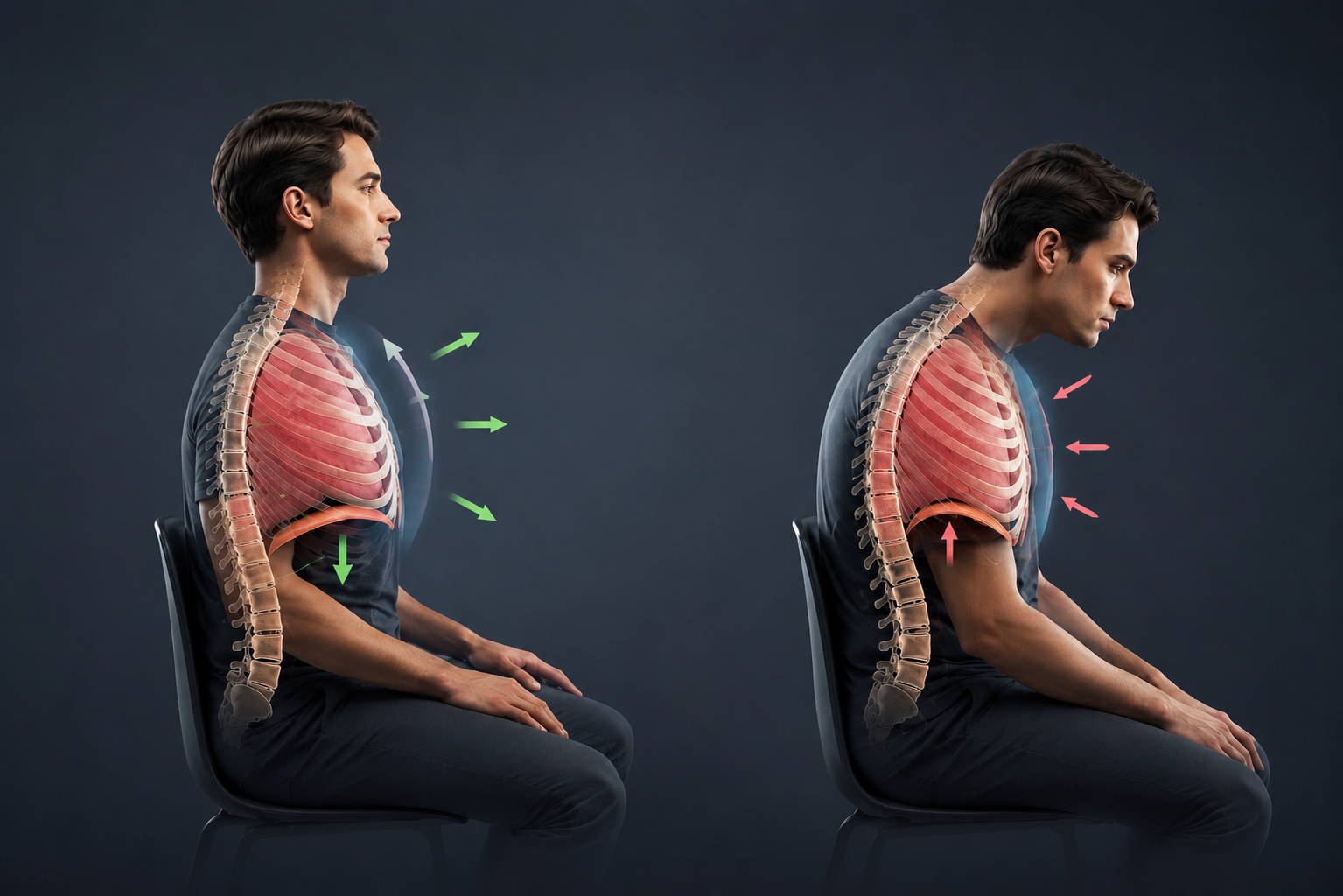
How Poor Shoulder Posture Affects Breathing and Energy Levels
Many people pay little attention to their shoulder posture during sitting, standing, or daily movement. Over time, however, poor posture can become a long-term habit that affects not only body alignment but also muscle function and overall comfort.
When the shoulders round forward or the head shifts out of its natural position, extra pressure is placed on the muscles and joints. This effect may gradually extend beyond the neck and back, influencing breathing efficiency and daily energy levels as well.
Why Does Shoulder Posture Affect the Entire Body?
Shoulder posture is closely connected to body balance, spinal alignment, muscle coordination, and respiratory function.
When the shoulders remain in a neutral position:
- The chest stays more open.
- Breathing muscles move more freely.
- The spine distributes physical load more efficiently.
However, prolonged sitting and continuous use of phones or computers often cause the body to lean forward. As a result:
- The shoulders round inward.
- The upper back becomes more curved.
- Pressure increases on the neck, shoulders, chest, and back muscles.
Over time, some muscles become excessively tight while others weaken, especially the muscles responsible for supporting posture and stabilizing the shoulders.
How Can Poor Shoulder Posture Affect Breathing?
Normal breathing depends on the ability of the rib cage to expand freely, along with proper movement of the diaphragm and respiratory muscles.
When the shoulders remain rounded forward for long periods:
- Chest expansion becomes more restricted.
- Breathing may become shallower.
- Respiratory efficiency may decrease.
In this position, the body may rely less on the diaphragm and more on the neck and shoulder muscles to assist with breathing. Over time, this can increase muscle tension and physical fatigue.
Some people may also begin taking shorter, shallower breaths instead of deep, natural breathing, reducing airflow efficiency.
The Connection Between Poor Posture and Low Energy
When breathing becomes less efficient, the body may need to work harder to meet its oxygen demands, even without obvious shortness of breath.
At the same time, the neck, shoulder, and back muscles may remain under constant tension, contributing to physical exhaustion and fatigue.
As a result, many people who spend long hours at desks experience symptoms such as:
- Persistent fatigue.
- Neck and shoulder heaviness.
- Frequent headaches.
- Reduced concentration.
- Feeling drained and exhausted by the end of the day.
These symptoms are often blamed entirely on workload or stress, but posture may be a major contributing factor.
Signs That Your Posture is Affecting Your Breathing
People may not immediately notice the impact of posture on breathing until recurring symptoms begin to appear, including:
- Frequent need to stretch the back or roll the shoulders.
- Difficulty taking a deep breath while sitting.
- Rapid or shallow breathing.
- Neck and shoulder pain.
- Fatigue after desk work.
- Headaches associated with prolonged sitting.
- A sensation of chest tightness or pressure.
These symptoms do not always indicate a serious condition, but they may suggest that posture is starting to affect muscle function and breathing patterns.
Can Posture Correction Improve Breathing?
Improving shoulder posture involves more than temporarily straightening the back. It usually requires consistent adjustments to daily habits and strengthening the muscles that support proper alignment.
Helpful strategies may include:
- Reducing prolonged sitting time.
- Raising computer screens to eye level.
- Avoiding constant neck bending while using phones.
- Strengthening the back and shoulder muscles.
- Performing chest-opening stretches.
- Practicing deep breathing exercises.
Regular movement and stretching may also reduce muscle tightness and improve rib cage mobility, helping breathing feel easier and more natural.
Even simple changes, such as standing up regularly during work hours or adjusting sitting posture, can noticeably improve comfort and daily energy levels.
When Should You Seek Medical or Physical Therapy Support?
Home exercises and posture correction may not always be enough, especially if poor posture is accompanied by persistent pain or noticeable movement limitations.
It may be helpful to consult a doctor or physical therapist if you experience:
- Ongoing neck or back pain.
- Difficulty moving comfortably.
- Frequent headaches.
- Persistent muscle tightness or numbness.
- Recurrent shortness of breath while sitting.
- Progressive worsening of posture over time.
Physical therapy can help identify weak or tight muscle groups and create a personalized plan to improve posture, breathing mechanics, and overall movement quality.
Final Insight
Poor shoulder posture may seem like a minor issue related only to body appearance, but its effects can extend much further, impacting breathing efficiency, muscle tension, daily comfort, and energy levels.
Paying attention to how you sit, stand, and move not only improves posture. It may also support better breathing, reduced fatigue, and greater physical comfort throughout the day.
Posture improvement begins with small daily changes and steady movement habits. Better alignment can support healthier breathing, reduced muscle strain, and improved overall comfort.
If you notice persistent shoulder or neck pain, you can book a medical consultation through iDoc to evaluate your condition and help you improve your posture and breathing.