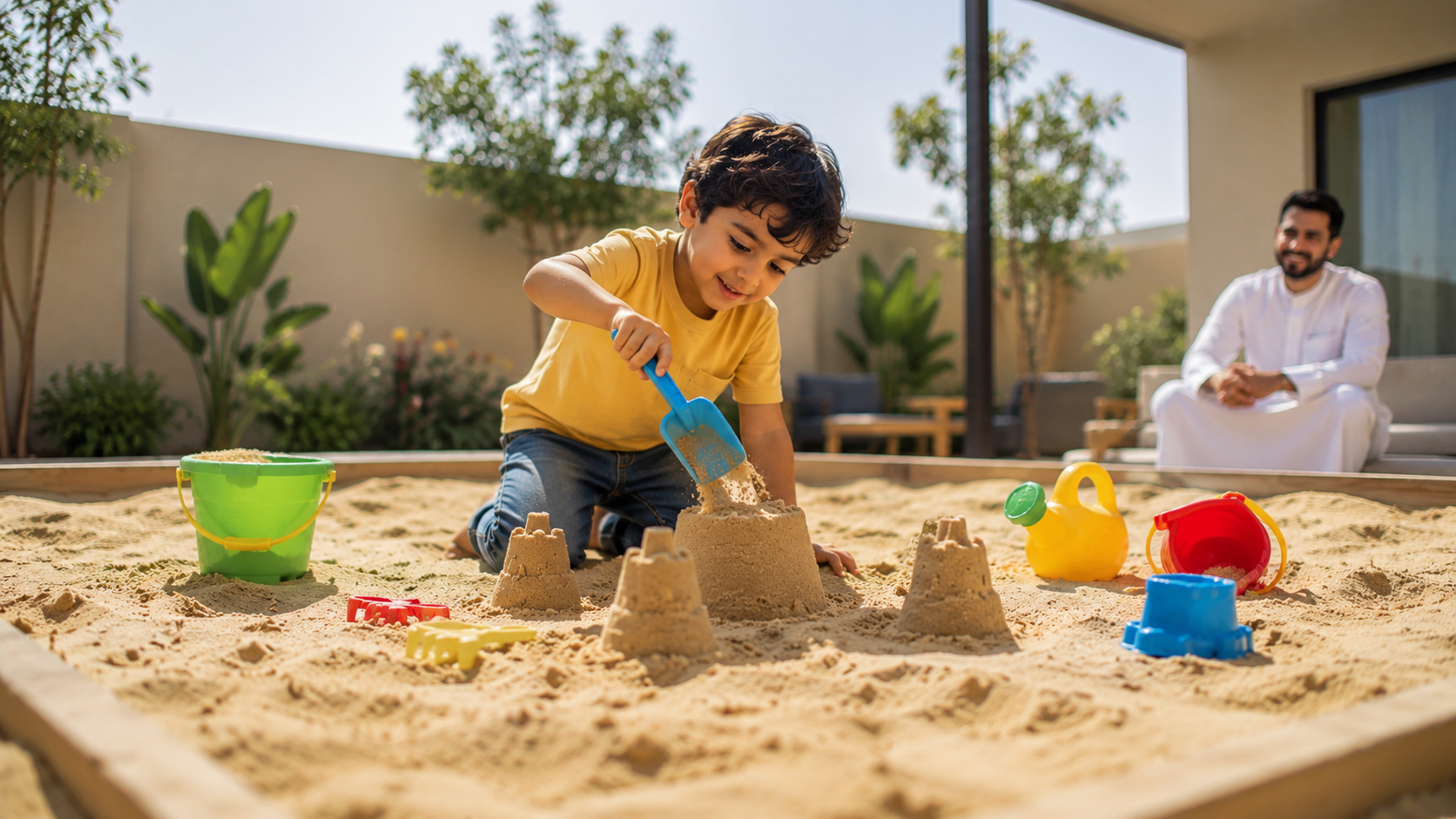
How Free Play Shapes Children’s Physical and Cognitive Development
In today’s world of structured schedules, academic pressure, and increasing screen time, free play is often underestimated or even ignored. However, research consistently shows that free play is not simply leisure; it is a core element of healthy child development.
Free play gives children the freedom to move, imagine, explore, and interact with their environment without direct adult control. Through this natural process, children develop physical strength, cognitive abilities, emotional balance, and social skills.
What Is Free Play?
Free play refers to unstructured, child-led activity that is not directed by adults or governed by strict rules.
Unlike organized activities, free play allows children to decide:
- What they want to do.
- How they want to play.
- How long do they want to continue?
For example:
- Building with blocks.
- Pretending to cook or act out roles.
- Playing freely in a garden or outdoor space.
These simple activities involve complex learning processes that support development.
Why Free Play Is Essential for Growth?
Free play is one of the most natural learning tools for children. It supports independence, creativity, and decision-making.
When children engage in free play:
- They develop problem-solving skills.
- They learn how to adapt to new situations.
- They build creativity and imagination.
- They strengthen independent thinking.
Studies suggest that free play supports holistic development by integrating physical, cognitive, and emotional growth at the same time.
Simply put, free play teaches children how to think, not just what to think.
Free Play and Motor Skill Development
One of the most important benefits of free play is its impact on physical development. It helps children develop:
- Gross motor skills: such as running, jumping, climbing and balancing.
- Fine motor skills: such as drawing, building with small objects and picking up and manipulating items.
Research shows that children who regularly engage in free play have:
- Better balance.
- Improved coordination.
- Greater physical confidence.
For example, a child playing outdoors, running, digging, or climbing, naturally develops strength and body awareness without structured instruction.
How Free Play Enhances Cognitive Skills?
Free play is also a powerful driver of brain development. It improves:
- Problem-solving abilities.
- Creativity and imagination.
- Focus and attention.
During imaginative play, such as pretending to be a teacher or doctor, children practice:
- Planning actions.
- Organizing thoughts.
- Abstract thinking.
Studies also show that free play supports self-regulation, the ability to control behaviour, emotions, and attention, which is strongly linked to academic success and long-term cognitive growth.
Emotional and Social Benefits of Free Play
Free play plays a major role in shaping emotional and social development.
It helps children learn how to:
- Express emotions in a healthy way.
- Cooperate with others.
- Build confidence.
- Resolve conflicts.
For example, when children play together in a park, they naturally:
- Share roles.
- Negotiate rules.
- Solve disagreements.
These interactions build empathy and social awareness over time. Research also shows that early play experiences contribute to stronger emotional stability and healthier relationships later in life.
Real-Life Examples
Free play can happen anywhere, using simple materials:
- Playing with sand or water.
- Building with blocks or toys.
- Role-playing (home, school, or shop).
- Exploring nature in a garden or park.
Although simple in appearance, these activities stimulate multiple areas of development simultaneously: physical, cognitive, and emotional.
What Happens When Free Play Is Limited?
A lack of free play, often due to excessive screen time or overly structured schedules, can negatively affect child development.
It may lead to:
- Weak motor skills.
- Difficulty in social interaction.
- Reduced attention span.
- Poor problem-solving abilities.
This clearly shows that play is not wasted time; it is essential learning time.
How to Encourage Free Play?
Parents and caregivers can support free play through simple actions:
- Limit daily screen time.
- Provide a safe and stimulating environment.
- Offer open-ended toys that encourage creativity.
- Avoid excessive direction during play.
- Encourage outdoor play regularly.
For example, allowing a child to explore a park freely can create more learning opportunities than structured activities.
Conclusion
Free play is a fundamental pillar of healthy child development. It connects movement with thinking, emotions with behaviour, and imagination with real-world experience. Rather than being separate from learning, free play is learning. It helps children grow into physically strong, mentally capable, and emotionally balanced individuals.
Encouraging free play is not just about giving children time; it is about giving them the space to develop naturally, explore freely, and build lifelong skills.
If you notice that your child is experiencing stress, isolation, or difficulty expressing emotions, book a medical consultation through iDoc and receive specialized guidance to help support your child emotionally.