Hidden Signs of PCOS: Is Your Body Trying to Tell You Something?
Some women experience physical or hormonal changes that may seem normal or harmless at first. However, these changes can sometimes be early signs of polycystic ovary syndrome (PCOS).
The greatest challenge is that these symptoms often develop gradually, making it difficult to connect them to a single underlying cause. As a result, diagnosis may be delayed.
In this article, we’ll explore the early signs of PCOS and how to recognize them, even before a formal diagnosis, so you can better understand your body and know when to seek medical advice.
Irregular or Missed Periods
Changes in your menstrual cycle are often one of the earliest and most noticeable signs. These may include:
- Delayed periods or cycles occurring every few months.
- Long gaps between periods.
- Irregular or heavy bleeding.
If you notice repeated irregularity without a clear reason, it may indicate ovulation issues. In some cases, cycles become progressively less regular over time instead of maintaining a consistent pattern.
Excess Hair Growth (Hirsutism)
Increased hair growth in unusual areas is a common sign, especially in:
- Chin or upper lip.
- Chest or lower abdomen.
This is often linked to higher levels of certain hormones. You may find yourself needing to remove facial hair more frequently than usual.
Persistent Acne and Oily Skin
Hormonal acne differs from typical acne and may show up as:
- Breakouts that continue beyond the teenage years.
- Pimples concentrated around the jawline or chin.
- Noticeably oily skin.
If your skin doesn’t improve despite following your usual skincare routine, hormonal changes may be the reason.
Unexplained Weight Gain or Difficulty Losing Weight
Some women notice gradual weight gain, especially around the abdomen, or struggle to lose weight despite maintaining a healthy diet.
This is often related to how the body processes energy. You may find that the same habits that worked before no longer give the same results.
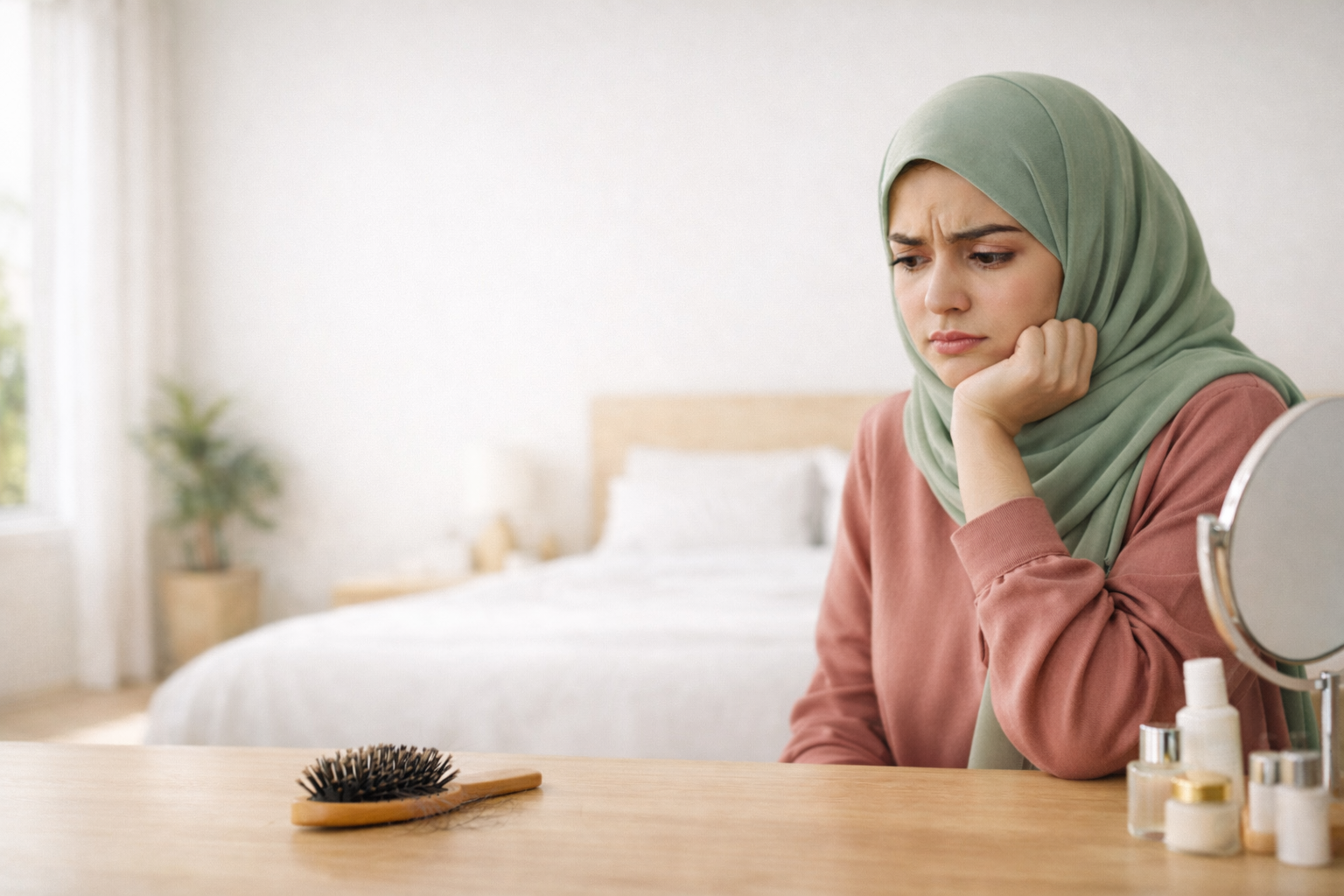
Hair Thinning or Hair Loss
While some women experience excess hair growth in certain areas, others may notice the opposite:
- Thinning hair at the front or crown of the scalp.
- Increased hair shedding during brushing or showering.
This combination can be confusing, especially when it occurs alongside acne or excess hair growth.
Darkened Skin in Certain Areas
Some women may notice slightly thickened, darker patches of skin in areas such as:
- Back of the neck.
- Under the arms.
- Inner thighs.
These areas may feel soft or velvety. These changes are often linked to internal factors rather than being purely a skin issue.
Difficulty Getting Pregnant
PCOS may disrupt ovulation, which can make it harder to get pregnant. This doesn’t mean pregnancy is impossible, but it may take longer or require medical support. It’s common for some women to experience a delayed pregnancy despite regular attempts.
Mood Changes and Low Energy
Hormonal changes don’t only affect the body; they also impact mental and emotional well-being. You may notice:
- Increased anxiety or stress.
- Low energy levels even after rest.
- Difficulty staying motivated.
These symptoms are often mistaken for everyday stress, which makes them easy to overlook.
Why Are These Signs Often Ignored?
PCOS symptoms rarely appear suddenly. Instead, they develop gradually, and each symptom may seem unrelated. For example:
- Irregular periods may be blamed on stress.
- Acne may be seen as a skin issue.
- Weight gain may be linked to diet.
Because these signs are not always connected, the underlying cause may go unnoticed.
When Should You Consider Getting Checked?
You don’t need to have all the symptoms to take action. It’s advisable to seek medical advice if you notice:
- Ongoing irregular periods.
- Two or more symptoms occurring together (e.g., acne with hair changes).
- Symptoms that persist without improvement.
Early testing doesn’t mean something is seriously wrong; it simply helps you understand what’s happening in your body more clearly.
Why Early Awareness Matters?
Paying attention to early signs can make a significant difference. With proper follow-up, many women can:
- Manage symptoms more effectively.
- Improve cycle regularity.
- Support overall health and fertility.
The earlier you understand your body’s signals, the easier it becomes to manage them.
Final Thoughts
PCOS doesn’t always present in obvious ways. Its symptoms can be subtle and easy to overlook, but when multiple changes happen at the same time, they shouldn’t be ignored. When you notice persistent cycle irregularities, changes in your skin or hair, or difficulty managing your weight, it’s best to consult a doctor.
If you’re experiencing recurring symptoms or are concerned about hormonal changes, book a medical consultation through iDoc to get an accurate evaluation and a personalized plan to help you manage symptoms early and effectively.