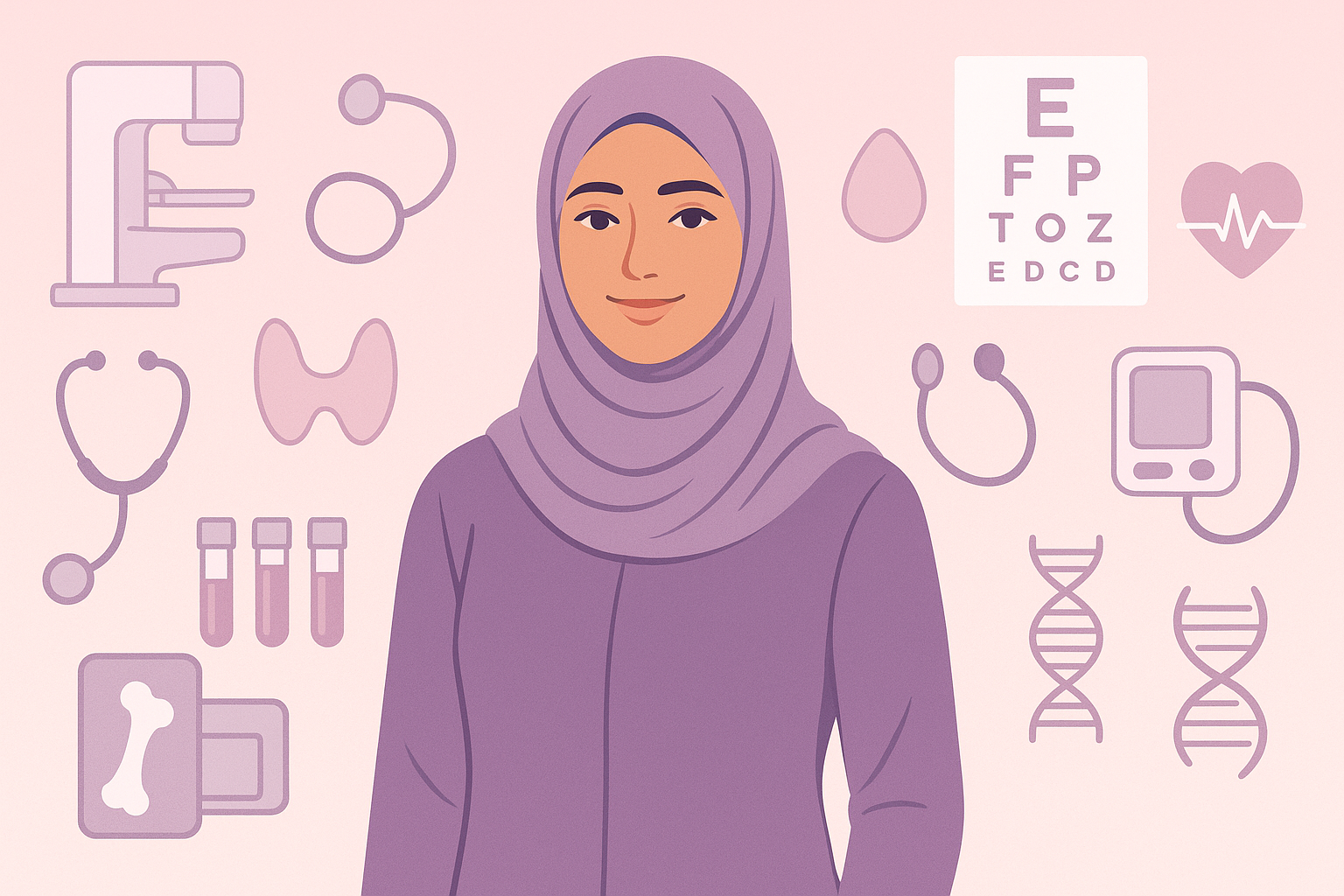
Essential Screenings Every Woman Should Know
We all know that routine checkups are now a cornerstone of healthy living. They help prevent disease, detect illnesses before they progress, and allow for early treatment.
Women, in particular, may have a greater need for regular screenings due to their unique biology and health considerations.
In this article, we will explore why routine screenings are especially important for women, highlight the key tests they should consider, and explain how each is performed.
Why Women Need Specialized Screenings?
A woman’s body has a complex biology that requires closer monitoring and more frequent screenings than men. Here are some reasons why:
- Women of reproductive age need regular follow-ups to detect any conditions that may harm them or their baby and to ensure a safe pregnancy.
- Women go through hormonal changes throughout life, from puberty to menopause, making it important to monitor hormonal balance.
- Certain conditions are more common in women, including depression, osteoporosis, and thyroid disorders.
Because of these factors, early detection clinics dedicated to women have become widespread worldwide, helping many catch health issues before they develop and diagnosing others in the early stages.
The Most Important Screenings for Women
Women may need different screenings depending on age, medical history, overall health, and genetic factors. The following tests are among the most commonly recommended:
- Mammogram
- Cervical Cancer Screening
- Osteoporosis Screening
- Skin Cancer Screening
- Cholesterol Test
- Blood Pressure Check
- Colorectal Cancer Screening
- Diabetes Screening
- Glaucoma Test
Mammogram for Early Breast Cancer Detection
Breast cancer rates have increased in recent years, making mammography an essential tool for early detection.
A mammogram is an X-ray procedure where each breast is gently compressed between two plates to capture a detailed image and identify any abnormal lumps before they can be felt during a physical exam.
Doctors generally recommend an annual mammogram starting at age 40. After age 50, it may be done every two years. Women with a family history of breast cancer, such as a mother or sister diagnosed with the disease, are advised to begin screening earlier.
Osteoporosis Screening Before Fractures Occur
Bone density naturally decreases with age. Hormonal changes and pregnancy can also increase the risk of osteoporosis.
Women should have a bone density scan at age 65 and repeat it every three years if no symptoms are present. If there is a history of frequent fractures or low body weight, earlier testing is recommended.
This test is performed using X-ray technology to measure bone density and detect osteoporosis before fractures happen.
Cholesterol Test and Heart Health
High cholesterol is one of the major risk factors for cardiovascular disease. It builds up slowly on artery walls, causing narrowing or blockages.
If a piece of plaque breaks loose, it can lead to a blood clot that travels through the bloodstream, potentially blocking a small vessel and causing serious complications.
The U.S. National Institutes of Health recommends cholesterol screening every five years for people ages 20 to 65, and annually after 65.
The test involves a fasting blood draw (9–12 hours) to measure total cholesterol, triglycerides, and levels of both HDL (good) and LDL (bad) cholesterol.
The Importance of Blood Pressure Checks
High blood pressure is one of the leading causes of heart disease, and its risk increases with age.
Doctors recommend starting blood pressure measurement at age 20. If readings are normal (120/80), recheck every two years until age 40, then once a year after 40.
When to Test Blood Sugar?
The American Diabetes Association recommends starting blood glucose screening at age 35 to detect insulin resistance or type 2 diabetes.
Some women may need earlier screening, especially those who have:
- High blood pressure
- Insulin resistance
- A history of heart disease
- A first-degree relative with diabetes
Women planning pregnancy should check blood sugar before conception and monitor it during pregnancy, particularly between weeks 24 and 28, to detect gestational diabetes.
The Importance of Skin Cancer Screening
The American Cancer Society recommends monthly self-examinations at home to monitor any skin changes. This is especially important for women who are frequently exposed to sunlight or have a family history of skin cancer.
In addition, a yearly full-body skin exam by a dermatologist is recommended starting at age 40.
How Cervical Cancer Screening Is Performed?
Cervical cancer is usually caused by infection with the human papillomavirus (HPV), which is sexually transmitted.
A Pap smear involves collecting a sample of cervical cells to examine them under a microscope. Screening should begin at age 21 and be repeated every three years if risk factors are present.
The Role of Early Detection in Preventing Colorectal Cancer
Colorectal cancer typically begins as small, benign polyps that can be removed easily. If ignored, they may turn cancerous.
Screening is recommended starting at age 45 to detect and remove polyps early. Screening options include:
- Annual stool-based tests
- Flexible sigmoidoscopy or CT colonography every five years
- Colonoscopy every ten years
The Importance of Eye Exams
The eyes are among the most sensitive organs in the body, and vision problems can develop quickly.
For example, increased eye pressure often has no symptoms and can lead to glaucoma, which causes sudden vision loss if untreated.
Doctors recommend eye exams for women every two years between ages 20 and 60.
Final Word
Your health is your greatest asset. Do not wait for symptoms to appear. Routine screening is not a luxury, it is your shield against many diseases and a way to catch conditions early, when treatment is most effective.
References
Medlineplus.gov. Health screenings for women ages 18 to 39. Retrieved on the 17th of April 2025, from:
Healthimages.com. Screening tests every woman needs. Retrieved on the 17th of April 2025, from:
https://www.healthimages.com/screening-tests-every-woman-needs/
Webmd.com. Essential Screening Tests for Women. Retrieved on the 17th of April 2025, from:
https://www.webmd.com/women/ss/slideshow-screening-tests-women
Everydayhealth.com. 12 Health Screenings Women Should Have. Retrieved on the 17th of April 2025, from:
https://www.everydayhealth.com/womens-health/10-screenings-all-women-should-have.aspx
Uhhospitals.org. 11 Health Screening Tests Every Woman Should Have. Retrieved on the 17th of April 2025, from:
https://www.uhhospitals.org/blog/articles/2018/08/11-health-screening-tests-every-woman-should-have