Fainting: What to Do When Someone Suddenly Collapses
It can happen in a split second. Someone turns pale, feels unsteady, and suddenly collapses. In that moment, quick and calm action matters more than anything.
Fainting is often brief and harmless, but knowing how to respond can make a real difference in safety and recovery.
What Is Fainting?
Fainting, or syncope, is a brief loss of consciousness due to a sudden decrease in blood flow to the brain. It usually lasts only a few seconds to a minute, and most people recover quickly.
However, in some cases, it may indicate an underlying medical issue that needs attention.
Why Does Fainting Happen?
Common triggers include:
- Sudden drop in blood pressure.
- Dehydration.
- Low blood sugar.
- Heat exposure.
- Standing for long periods.
- Standing up too quickly.
- Stress or severe pain (vasovagal syncope).
Warning Signs Before Fainting
The body often gives early signals before fainting occurs:
- Dizziness or light-headedness.
- Blurred or narrowing vision.
- Nausea.
- Sweating.
- Pale skin.
- Sudden weakness.
Recognising these signs early can sometimes prevent a full collapse.
What Should You Do If You Feel Like You’re About to Faint?
If you sense it coming:
- Sit or lie down immediately.
- Raise your legs if possible.
- If seated, place your head between your knees.
- Avoid standing suddenly.
- Take slow, deep breaths.
These actions help restore blood flow to the brain.
If Someone Else Faints
If you witness someone fainting:
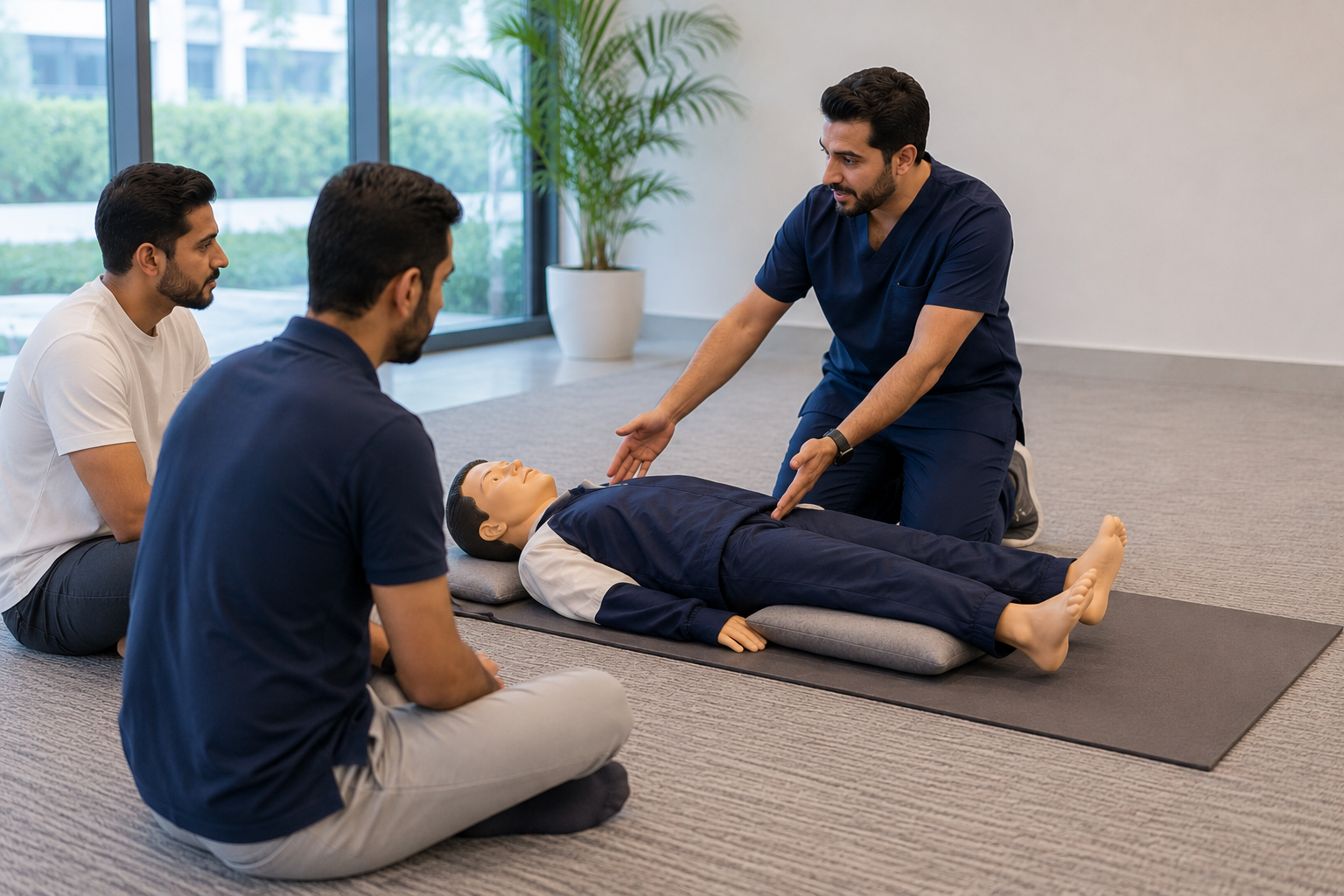
- Lay them flat on their back.
- Raise their legs slightly (about 20–30 cm).
- Loosen tight clothing.
- Ensure fresh air and good ventilation.
- Stay with them until they regain consciousness.
The First 60 Seconds Are Critical
In the first minute:
- Make sure they are in a safe position.
- Elevate their legs.
- Check for breathing.
- Look for any injuries from the fall.
- Keep the airway clear.
Think of this phase as stabilising the situation before anything else.
Check Breathing and Responsiveness
Once the person is lying down:
- Confirm they are breathing normally.
- Try to gently wake them.
If they are not breathing or not responding:
- Start CPR immediately.
- Call emergency services right away.
When to Call for Emergency Help?
Seek urgent medical attention if:
- They remain unconscious for more than one minute.
- There is chest pain.
- Breathing is difficult.
- Confusion persists after waking.
- There are injuries from the fall.
- Fainting occurs repeatedly.
What Should You Do After Waking Up?
Once they regain consciousness:
- Keep them lying down for a few minutes.
- Help them sit up slowly.
- Offer water if they are fully alert.
- Avoid sudden standing.
Rushing this stage can sometimes trigger another fainting episode.
What Not to Do?
Avoid these common mistakes:
- Do not force them to stand immediately.
- Do not offer anything to eat or drink if the person is unconscious.
- Do not shake them.
- Do not ignore repeated fainting episodes.
How to Reduce the Risk?
Simple habits can help prevent fainting:
- Stay well hydrated.
- Eat regular meals.
- Avoid standing still for long periods.
- Change positions slowly.
- Pay attention to early warning signs.
When to See a Doctor?
Medical evaluation is recommended if:
- Fainting happens more than once.
- There is no clear trigger.
- It occurs during physical exertion.
- It is linked to chest pain or a racing heartbeat.
- Injury occurred during the fall.
Doctors may recommend tests such as:
- ECG (heart monitoring).
- Blood tests.
- Tilt table test.
- Other investigations depend on the case.
Final Thought
Fainting is usually short-lived, but the response in those first moments is crucial. Staying calm and knowing what to do can turn a frightening situation into a controlled and safe one.
If fainting episodes happen repeatedly, they should not be ignored. Book a consultation with iDoc to identify the underlying issue that needs medical evaluation.