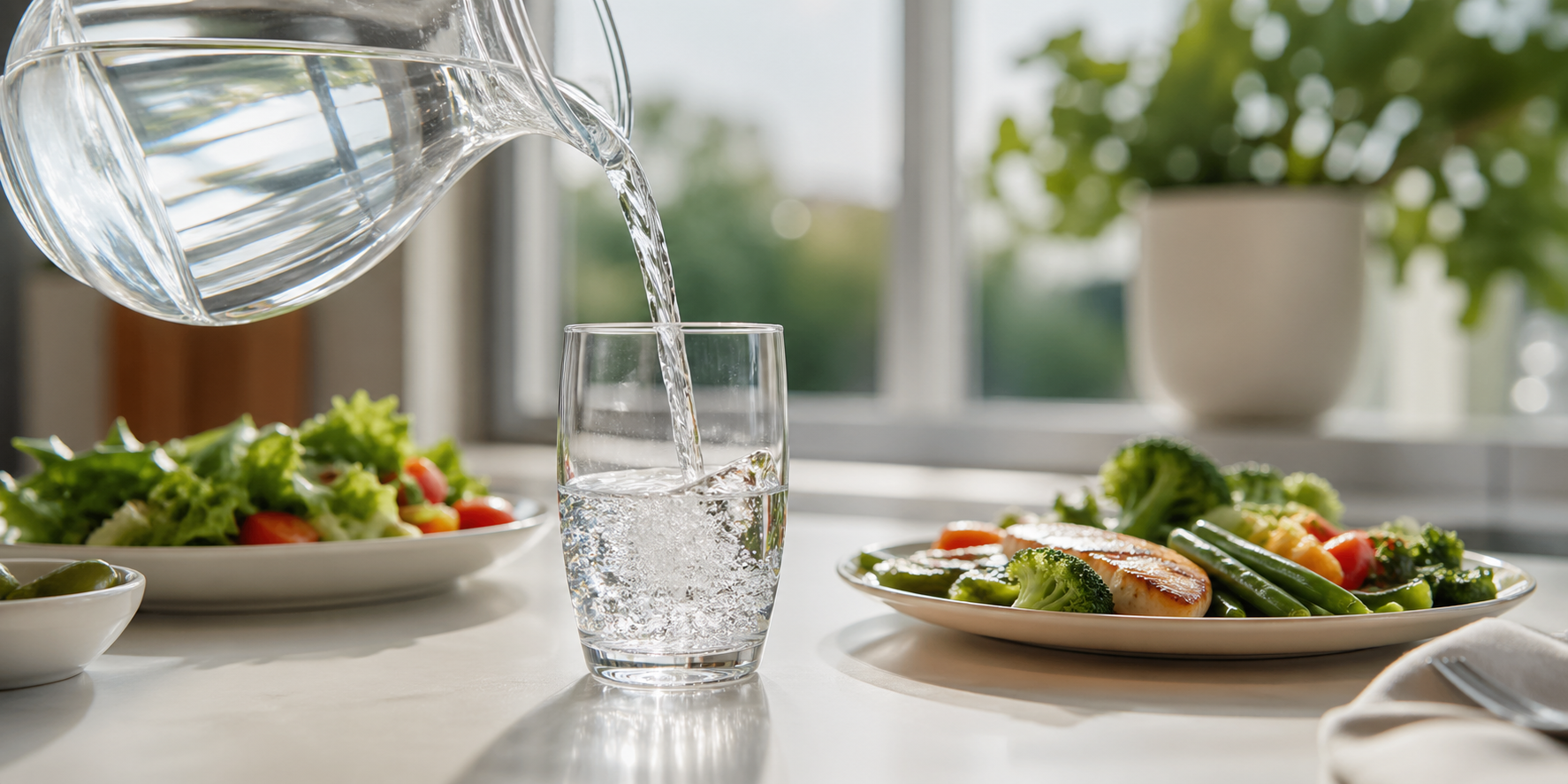
Why Drinking Water Is Key to Better Digestion
Most people associate drinking water with quenching thirst or general hydration. But its role goes far beyond that, especially when it comes to digestion. Every meal you eat goes through a complex journey inside the digestive system, and water is essential for making that process smoother and more efficient.
When hydration levels drop, digestion slows down, nutrient absorption becomes less effective, and waste elimination may become difficult. So how exactly does water support digestion, and what happens when your body doesn’t get enough?
Why Digestion Depends on Water
Digestion isn’t just about breaking down food. It involves a series of chemical and mechanical processes, and water plays a central role in all of them.
Water helps:
- Dissolve food components.
- Activate digestive enzymes.
- Transport nutrients inside the body.
When water intake is insufficient, these processes become slower and less efficient. This may lead to heaviness after meals, poor nutrient absorption, and common digestive problems, such as constipation.
How Water Supports the Start of Digestion
Digestion begins in the mouth, where water contributes to saliva production. Saliva contains enzymes that start breaking down food, especially carbohydrates.
With inadequate hydration:
- Saliva production decreases.
- Chewing and swallowing become more difficult.
- The initial phase of digestion slows down.
In this way, water prepares food from the very first step, making it easier for the digestive system to process it.
Water and Nutrient Absorption
After food is broken down, nutrients are absorbed in the small intestine, one of the most critical stages for overall health.
Here, water acts as a transport medium:
- It helps vitamins and minerals enter the bloodstream
- Supports the distribution of nutrients to body cells
- Improves overall absorption efficiency
That’s why fatigue or low energy isn’t always just about what you eat; it can also be linked to how well your body is hydrated.
Water and Constipation Prevention
Constipation is one of the most common digestive problems associated with low water intake. The colon relies on fluids to keep stool soft and easy to pass.
When the body lacks water, the colon absorbs more fluid from waste, leading to:
- Hard, dry stools.
- Difficulty passing stool.
- Discomfort during bowel movements.
Drinking enough water helps:
- Soften stool.
- Improve bowel movement.
- Reduce strain during elimination.
This effect becomes even more effective when combined with dietary fiber.
Does Drinking Water During Meals Affect Digestion?
There’s a common belief that drinking water during meals weakens digestion, but this isn’t accurate.
In reality, moderate water intake during meals can:
- Soften food.
- Make swallowing easier.
- Support digestive juices.
The key is balance, there’s no need to avoid water during meals, just don’t overconsume it.
What Happens When You Don’t Drink Enough Water?
Inadequate hydration can lead to several digestive changes, including:
- Slower digestion.
- Reduced efficiency of digestive enzymes.
- Increased bloating and gas.
- Difficulty with bowel movements.
- Poor nutrient absorption.
Over time, chronic dehydration can affect overall digestive comfort and performance.
Water and Bowel Movement
Healthy bowel movement depends heavily on proper fluid balance.
When you’re well-hydrated:
- Intestinal contractions improve.
- Digestive rhythm becomes more regular.
- The risk of constipation decreases.
In contrast, dehydration slows intestinal movement significantly.
How Much Water Do You Need?
There’s no single rule that fits everyone, but general guidelines include:
- Drink water consistently throughout the day.
- Don’t wait until you feel thirsty.
- Increase intake during hot weather or physical activity.
A simple indicator of good hydration is light-colored urine in most cases.
Simple Tips to Improve Digestion Through Hydration
- Spread your water intake across the day instead of drinking large amounts at once.
- Start your day with a glass of water to activate digestion.
- Combine water intake with fiber-rich foods.
- Increase fluids during exercise or the weather.
- Drink a glass of water before meals to support digestion.
When Should You Seek Medical Advice?
If digestive issues persist despite adequate hydration, it may be time to consult a healthcare professional, especially if you experience:
- Chronic constipation.
- Frequent bloating.
- Ongoing or unexplained digestive problems.
In such cases, the cause may go beyond hydration and require proper evaluation.
Final Thoughts
Water isn’t just essential for survival, it plays a key role at every stage of digestion, from saliva production to nutrient absorption and bowel regulation.
Maintaining proper hydration can significantly improve digestive efficiency and reduce common issues like bloating and constipation. It’s a simple habit, but one with a powerful impact on your overall health.
If you experience recurring digestive problems such as bloating or constipation, you can book a consultation through iDoc. A personalized plan can help you optimize both hydration and nutrition for better digestive health.