Is Allergy Season Disrupting Your Child’s Sleep and Focus?
Seasonal allergies are a common issue in children, yet their impact is often underestimated or mistaken for simple fatigue or lack of focus. However, research suggests that their effects can go deeper, especially when it comes to sleep quality, mental performance, and behavior.
In some cases, a child may appear frequently tired, easily distracted, or struggle to focus in class or while doing homework. These behaviors are often interpreted as attention issues or a lack of interest, while the real cause may be linked to seasonal allergies and their indirect effect on sleep.
In this article, we explore the connection between allergies and sleep quality in children, how this impacts mental and behavioral performance, and the key signs that should prompt medical attention.
What Are Seasonal Allergies in Children?
Seasonal allergies are an overreaction of the immune system to harmless substances such as pollen, dust, or mould, which the body mistakenly treats as threats.
Children may experience a variety of symptoms, including:
- Runny or blocked nose.
- Frequent sneezing.
- Itchy eyes or nose.
- Increased tear production.
Although these symptoms may seem mild, they can significantly affect a child’s comfort, especially at night.
In some cases, symptoms are not clearly expressed, as children may not communicate them directly. Instead, they may appear through changes in behavior and daily activities.
How Do Allergies Affect Sleep?
Nasal congestion is one of the main symptoms that disrupts sleep, as it makes breathing more difficult and reduces overall sleep quality.
A child may wake up several times during the night or toss and turn without an obvious reason. Parents may also notice:
- Mouth breathing during sleep.
- Snoring.
- Frequent awakenings.
- Difficulty falling asleep.
These factors reduce sleep quality, even if the child gets enough hours of sleep.
How Poor Sleep Affects Focus and Behavior?
When sleep quality is consistently affected, it clearly reflects on a child’s daily performance. They may experience:
- Difficulty concentrating during schoolwork.
- Trouble understanding information.
- Easily forgetting instructions.
- Slower task completion.
You might notice your child sitting in front of homework for a long time without finishing it or needing repeated instructions.
Behavioral changes may also appear, such as:
- Increased irritability.
- Mood swings.
- Lower energy and motivation.
It’s important to note that sleepiness doesn’t always appear in the usual way. Some children may become more hyperactive or irritable instead.
Small Signs You Shouldn’t Ignore
The link between symptoms and allergies is not always obvious, but certain signs may help you spot the issue early, such as:
- Mouth breathing.
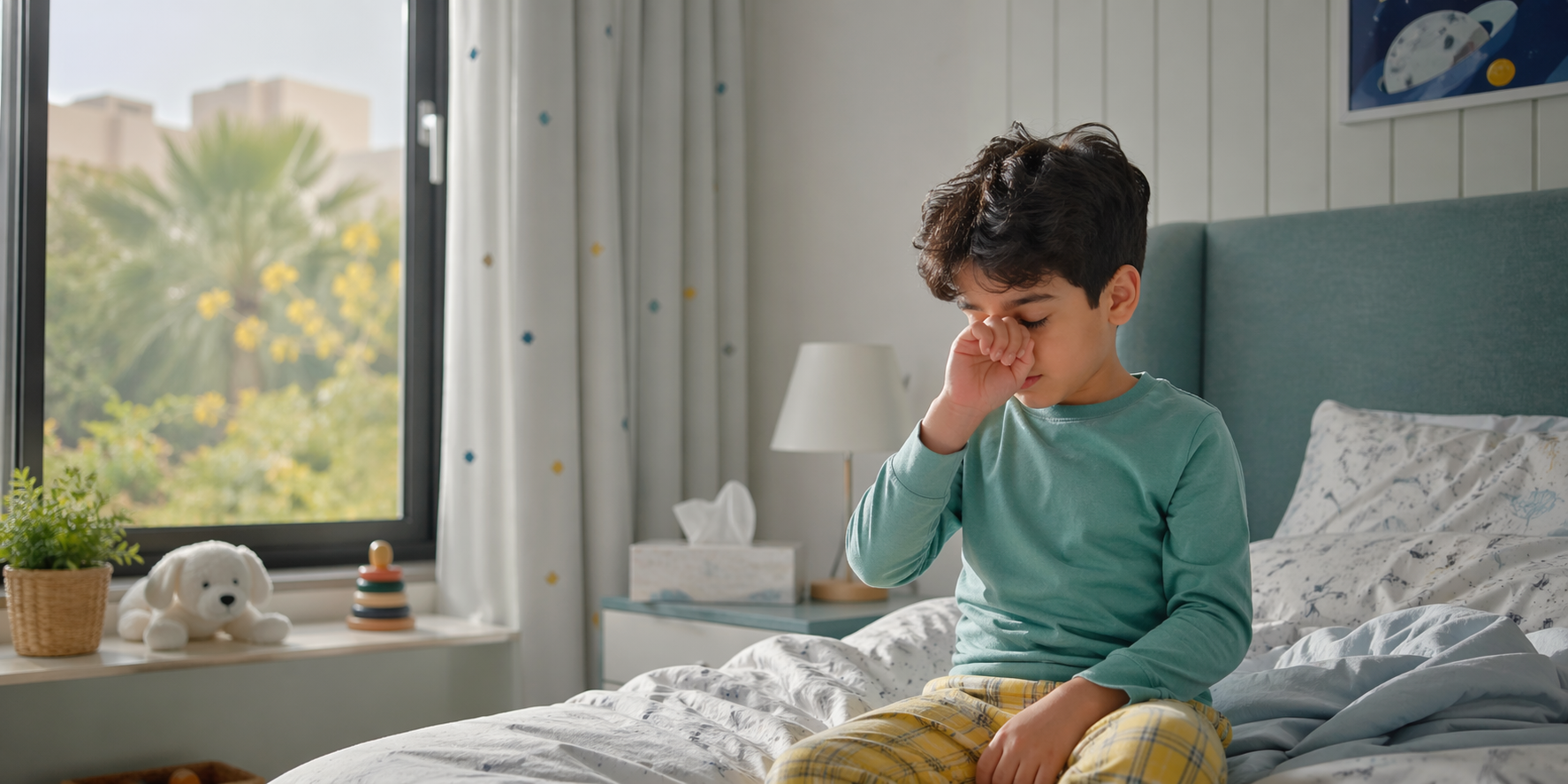
- Frequent nose or eye rubbing.
- Dark circles under the eyes.
- Avoiding activities that require focus, such as reading.
- Increasing the volume of devices or TV, either due to temporary hearing issues from congestion or to compensate for poor concentration.
For example, your child may refuse to study or complain of boredom quickly, while the real cause is fatigue resulting from poor sleep.
In many cases, the full picture isn’t clear at first glance, so paying attention to small behavioral details plays an important role in identifying the problem.
How Allergies Affect Academic Performance?
The impact of allergies goes beyond sleep and can indirectly affect academic performance due to:
- Reduced concentration.
- Increased distraction.
- Ongoing fatigue.
Over time, parents may notice:
- Declining school performance.
- Difficulty following class lessons.
- Reduced participation and interaction.
For example, if a child was previously performing well in school but starts to decline gradually without a clear reason, the cause may be related to sleep quality, not their abilities.
When Should You See a Doctor?
Seasonal allergies can often be managed easily, but medical advice is recommended if:
- Symptoms persist for a long time.
- Sleep is clearly affected.
- Academic performance declines.
- The child appears constantly fatigued.
A medical evaluation helps identify the exact cause and determine the appropriate treatment plan.
How to Improve Sleep in Children with Allergies?
You can reduce the impact of allergies on sleep with simple steps, such as:
- Keeping the room clean and reducing dust.
- Ventilating the space regularly.
- Using hypoallergenic pillows and bedding.
- Rinsing the nose with saline when needed to relieve congestion and improve breathing during sleep.
- Following the prescribed treatment plan.
- Maintaining a consistent sleep schedule.
Final Thoughts
Seasonal allergies in children are not just a minor respiratory issue; they can directly and indirectly affect sleep quality, focus, behaviour, and academic performance.
The problem often starts subtly, making early recognition especially important. Paying attention to small behavioural changes can help identify the cause early and significantly improve your child’s quality of life.
If symptoms persist or begin to affect daily life, seeking medical advice is essential to properly evaluate the condition and create an appropriate treatment plan.
If you notice your child experiencing ongoing fatigue or difficulty concentrating without a clear reason, you can book an instant or scheduled consultation through iDoc to speak with a specialist and receive a personalized assessment and plan to help your child sleep better and improve focus.