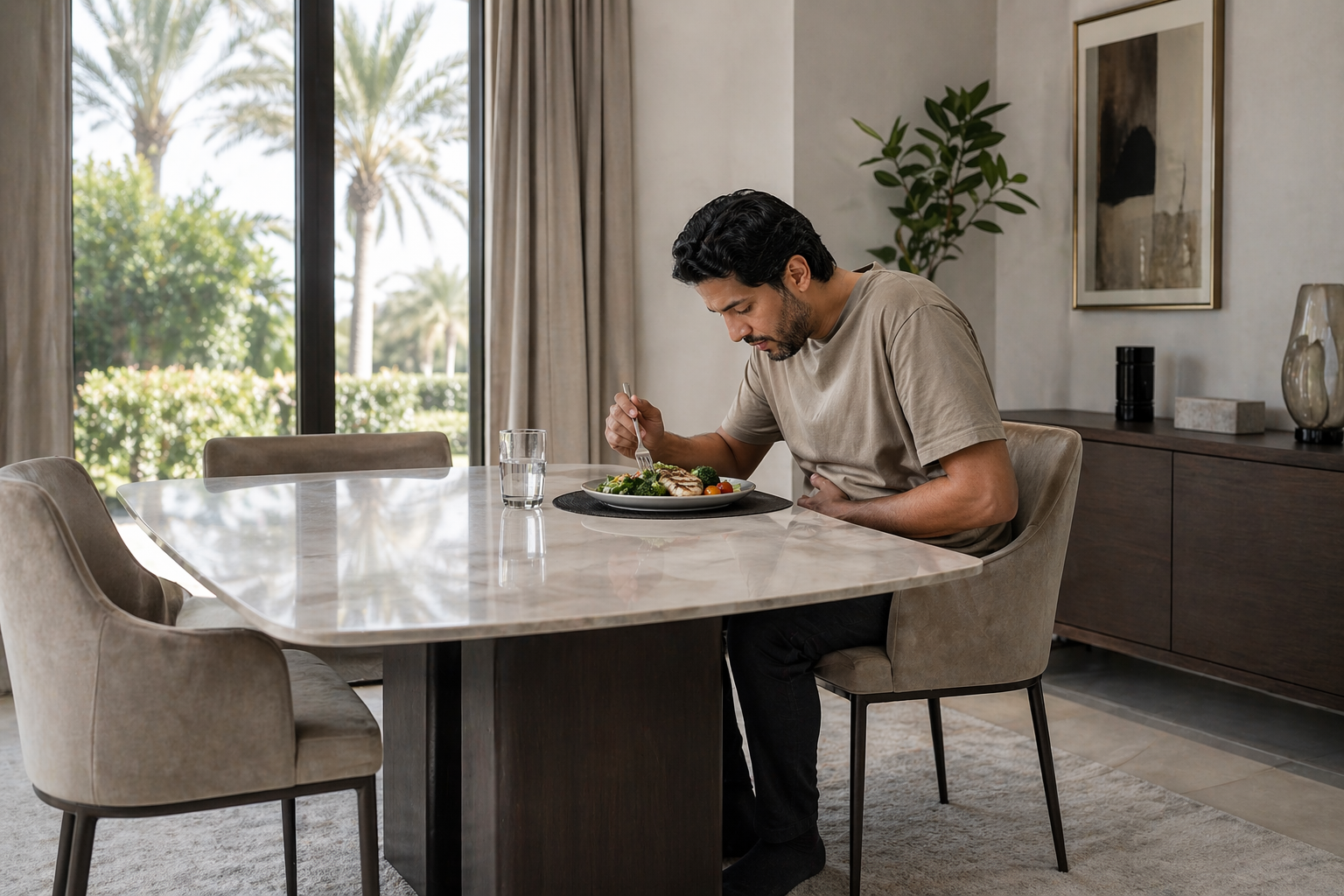
Does How You Sit While Eating Affect Your Digestion?
Do you usually eat while sitting upright, leaning forward, or relaxing on the sofa? It may seem like a minor detail, but in reality, your posture during meals can noticeably affect how well your digestive system works. Sitting position doesn’t stop digestion, but it can either support it or make it less efficient.
By paying attention to this simple habit, you can make small adjustments that may reduce bloating, ease acid reflux, and help you feel more comfortable after meals.
How Does Your Posture Affect Digestion?
Digestion is a complex process. It doesn’t happen in just one step, it’s a coordinated system that starts in the mouth, moves through the stomach, and continues into the intestines.
This process mainly depends on two key factors:
- Muscle movement within the digestive system.
- Gravity.
When you sit upright, gravity helps food move downward smoothly, supporting a more efficient digestive process. It’s almost like creating an easy pathway for food to travel through your system.
On the other hand, poor posture can increase pressure on the abdomen, which may slow down the movement of food. This doesn’t stop digestion, but it can make it slower and less comfortable, sometimes causing a feeling of discomfort.
What Is the Best Position for Eating?
Not all positions affect digestion in the same way. At the same time, there isn’t a completely wrong position, but some are better than others:
- Sitting upright: Supports digestion most effectively.
- Standing: May speed up digestion, but isn’t always comfortable.
- Lying down: Can slow digestion and increase the risk of acid reflux.
For example, imagine the difference between eating calmly at a table versus eating while lying on the sofa.
In the first case, digestion tends to be smoother and more comfortable. In the second, you may feel more pressure and discomfort in your stomach.
Why Is Sitting Upright Recommended?
Sitting upright is one of the best positions for supporting digestion. It gives your digestive system enough space to function without unnecessary pressure.
This can help:
- Food moves more easily with gravity.
- Reduce pressure on the stomach.
- Lower the risk of acid reflux and heartburn.
How Can Poor Posture Affect Digestion?
Leaning forward or sitting in an uncomfortable position, especially after eating, can make digestion more difficult.
When you lean forward:
- Pressure on the stomach and intestines increases.
- Digestion may slow down.
- You may feel bloated or overly full,
For example: if you sit bent forward over after a heavy meal, you might feel an uncomfortable heaviness, as if the food is stuck midway.
Is Eating While Standing Good or Bad?
Eating while standing isn’t harmful by itself. In fact, it may help digestion move a bit faster and make you feel lighter. However, it can also have some downsides:
- You may eat too quickly.
- You may be less aware of fullness.
- It may increase the risk of bloating or overeating.
How Do Post-Meal Habits Affect Digestion?
What you do after eating is just as important as how you sit while eating. Some habits can support digestion, such as:
- Sitting upright for a while.
- Taking a light walk.
On the other hand, it’s better to avoid:
- Lying down immediately after eating.
- Bending forward or putting pressure on your abdomen.
Remember, lying down or slouching after a meal can interfere with digestion and increase the chance of acid reflux, while light walking helps your digestive system function more efficiently.
How Do Focus and Eating Style Affect Digestion?
Your posture doesn’t just affect your body, it also influences how you eat. When you sit comfortably and upright:
- You tend to eat more slowly.
- You chew your food better.
- You recognize fullness at the right time.
This helps your body digest food more efficiently.
In contrast, eating quickly or in uncomfortable positions may lead to overeating without noticing, increasing the risk of digestive discomfort.
Practical Tips to Improve Digestion
You can support better digestion with simple adjustments:
- Sit upright while eating.
- Avoid slouching or putting pressure on your abdomen.
- Stay seated briefly after meals.
- Take a light walk after eating.
- Eat slowly and mindfully.
- Choose a comfortable position during and after meals.
Final Thoughts
Your sitting position while eating doesn’t stop digestion, but it directly affects how comfortable you feel afterwards. Sitting upright, avoiding slouching, and paying attention to what you do after meals are simple habits that can make a noticeable difference in your daily comfort.
Be more aware of your body, and try small adjustments in how you sit and eat. These simple changes can make your overall eating experience much more comfortable.
If you are experiencing recurring digestive problems, you can book a medical consultation through iDoc to accurately assess your condition and receive a personalized plan that fits your needs.