Is Your Thyroid Working Properly? Symptoms and Tests
Despite its small size, the thyroid gland is essential for regulating many of the body’s functions. It controls how fast your body burns calories, regulates heart rate, and even affects brain activity and concentration.
Many people live for years without realizing there is a problem with their thyroid, as disorders often develop slowly and progressively.
Understanding how this gland works and recognizing early warning signs is essential for maintaining overall health and preventing long-term complications. Here’s what you should understand about thyroid health.
How the Thyroid Controls Energy and Metabolism?
The thyroid gland is present at the base of the neck and it’s a small butterfly-shaped gland. Despite its size, it is responsible for a vital process: regulating metabolism—the conversion of food into energy.
It produces two main hormones:
- T4 (Thyroxine)
- T3 (Triiodothyronine)
The body produces large amounts of T4, which is then converted in tissues into T3, the active hormone that directly affects cellular activity.
The thyroid works closely with the pituitary gland in a finely tuned system. The pituitary releases TSH (Thyroid-Stimulating Hormone) to regulate thyroid hormone production precisely.
How to Know If Your Thyroid Is Functioning Normally?
When the thyroid works efficiently, it maintains a delicate balance between T3 and T4 and responds appropriately to TSH levels. This balance is reflected in the body through:
- Stable energy levels.
- Consistent body weight.
- Proper functioning of vital organs.
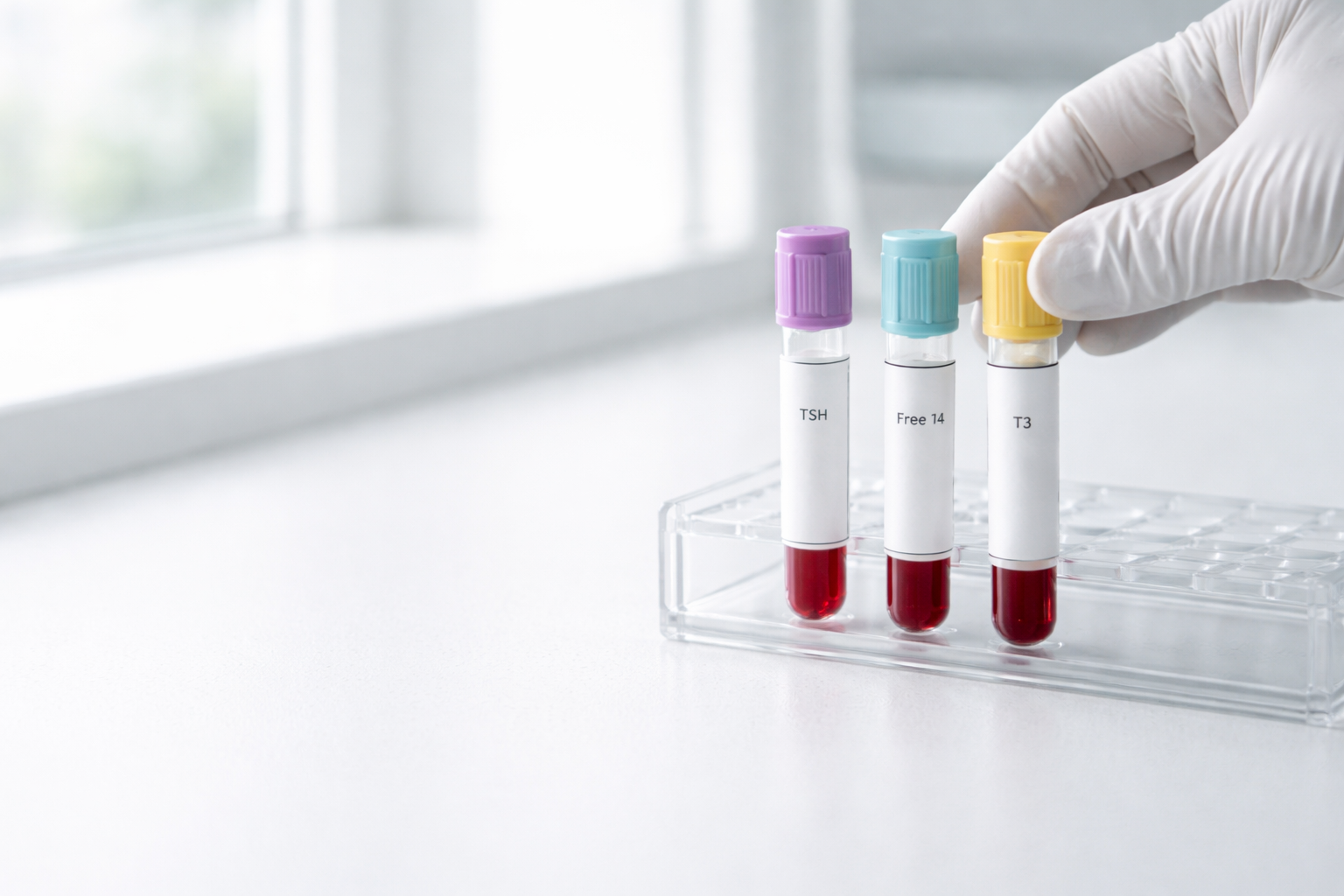
A blood test is the most accurate way to evaluate thyroid function, particularly by measuring:
- TSH
- Free T4
- T3
Among these, TSH is the most sensitive indicator, as it often changes before noticeable shifts occur in other hormone levels.
Common Thyroid Disorders
Thyroid disorders are generally classified into two main types: hypothyroidism and hyperthyroidism. Each affects the body differently because of its direct impact on metabolism.
Symptoms of Hypothyroidism
A low level of thyroid hormones can slow down the body’s metabolism. Symptoms may include:
- Persistent fatigue.
- Unexplained weight gain.
- Sensitivity to cold.
- Dry skin and hair loss.
- Slow thinking or depression.
Symptoms of Hyperthyroidism
When the thyroid becomes overactive, metabolism speeds up, which can lead to:
- Rapid heartbeat.
- Anxiety and nervousness.
- Weight loss despite normal or increased appetite.
- Excessive sweating and heat intolerance.
- Hands tremors.
How Thyroid Function Is Tested?
If thyroid dysfunction is suspected, doctors usually begin with blood tests to evaluate hormone levels and determine whether the gland is working normally. Common tests include:
- TSH test (the primary screening test)
- Free T4 test
- T3 test when hyperthyroidism is suspected
These tests help diagnose conditions such as:
- Hypothyroidism.
- Hyperthyroidism.
- Conditions like Hashimoto’s thyroiditis and Graves’ disease, which are autoimmune in nature, often trigger thyroid disorders.
If results are abnormal, doctors may request additional imaging, such as:
- Thyroid ultrasound.
- Radioactive iodine uptake test.
These provide a clearer picture of thyroid structure and function.
How to Understand Your Test Results?
At first glance, thyroid test results may seem complicated, but they follow clear patterns:
- High TSH + low T4: Hypothyroidism.
- Low TSH + high T4 or T3: Hyperthyroidism.
- Normal TSH: Thyroid function is usually normal.
TSH acts as an early warning signal, often changing before other hormone levels become abnormal.
How Diet and Lifestyle Affect Thyroid Health?
The thyroid relies on certain nutrients to produce hormones and function efficiently. The most important are:
- Iodine: essential for thyroid hormone production.
- Selenium: plays an important role in converting the thyroid hormone T4 into its active form, T3.
Chronic stress, extreme dieting, and certain medications can disrupt hormonal balance and negatively affect thyroid performance.
When Should You Get Your Thyroid Tested?
You should consider getting your thyroid tested if you notice any related symptoms:
- Persistent fatigue despite adequate sleep.
- Unexplained weight changes.
- Menstrual irregularities.
- A family history of thyroid disease.
- Mood changes or difficulty concentrating.
Because thyroid disorders often develop slowly, early diagnosis allows more effective treatment and helps prevent complications.
Final Thoughts
The thyroid gland is crucial for controlling metabolism, generating energy, and maintaining hormonal balance.
When it does not function properly, it can affect energy levels, weight, mood, and heart health.
Paying attention to early symptoms and understanding your test results can help you detect thyroid problems early and treat them effectively.
If you’re experiencing chronic fatigue, sleep disturbances, or unexplained hormonal symptoms, book an instant or scheduled consultation through iDoc to assess your sleep patterns and hormone levels and receive a treatment plan tailored to your condition.