Can Food Help Preserve Your Vision?
There is no magic pill that will grant you perfect vision for an entire lifetime, but what you eat daily makes a significant difference over time. Studies have shown that the food you consume daily plays a significant role in preserving the quality of your vision at different ages, and that a deficiency in certain vital nutrients may, over time, lead to the degeneration of the macula and other sensitive areas of the eye.
What are the vital nutrients that you should consume? What foods should you avoid? What supplements should you consider? We will address the following questions in the next few lines.
How Does Diet Affect Vision?
It is normal for the vision acuity to decrease over time. For example, reading small letters can become difficult, night vision can decrease, and contrast sensitivity can also decrease.
It always results from oxidative stress in cells. This is an imbalance between free radicals and antioxidants. It may cause eye damage over time.
When free radicals accumulate in large quantities, they oxidise and damage healthy cells. This can lead to the development of the following eye conditions:
- Age-related macular degeneration.
- Cataracts.
- Glaucoma.
Dietary antioxidants can play a crucial role in preventing vision deterioration and maintaining healthy retinal cells.
What nutrients do your eyes need daily?
Dietary habits can protect against age-related eye diseases. On the other hand, poor dietary habits can reduce vision acuity.
Lutein and Zeaxanthin
These carotenoids accumulate in the macula and support clear vision. They filter out harmful blue light and protect against oxidative stress.
The AREDS2 trial proved that these carotenoids protect from the progression of macular degeneration. You can get them from:
- Spinach.
- Kale.
- Swiss chard.
- Collard greens.
- Parsley.
- Pistachios.
- Green peas.
- Egg yolk (along with fat to improve carotenoid absorption).
- Yellow corn.
Vitamin A
It plays a vital role in maintaining light-sensitive cells in the human eye. It improves vision in low light and at night and also helps maintain the health of the eye surface.
The absence of Vitamin A in the human eye causes:
- Night blindness.
- Dry eyes.
- Severe conjunctival dryness.
The human body converts beta-carotene from carrots and leafy vegetables to retinol. Vitamin A active form is present in:
- Liver.
- Egg yolk.
- Dairy products.
Vitamin C
Vitamin C is located in the fluid in front of the eye lens in large quantities. It is a strong antioxidant that helps prevent cataracts and macular degeneration.
Main sources of vitamin C:
- Oranges.
- Lemons.
- Grapefruits.
- Sweet peppers.
- Broccoli.
- Cabbage.
Vitamin E
The retina of the eye contains a large number of polyunsaturated fatty acids, making it susceptible to oxidation. Vitamin E is a strong antioxidant that helps protect the retinal cells from damage.
Sources of vitamin E:
- Almonds.
- Sunflower seeds.
- Vegetable oil.
- Avocados.
Research indicates that supplements may not be necessary if you consume enough vitamin E through food.
Zinc
Zinc supports the production of visual pigments in the retina and transports vitamin A from the liver to the eye. Research indicates that consuming 80 mg of zinc helps reduce the progression of degeneration in the macula of the eye by 25%. However, excessive amounts may interfere with the absorption of other minerals.
Main sources of zinc:
- Oysters.
- Red meat.
- Pumpkin seeds.
- Legumes.
Selenium and Flavonoids
They promote resistance to oxidative stress, support retinal cell function, and protect against certain types of glaucoma.
Flavonoids are located in foods such as:
- Berries.
- Tea.
- Citrus fruits.
- Dark chocolate.
Selenium can be located in:
- Nuts.
- Seafood.
- Animal proteins.
- Grains and grain products.
- Dairy products.
Omega-3 and its role in preventing dry eye
Omega-3 fatty acids, which consist of DHA and EPA, are important components of the cell membranes of retinal cells, and DHA is particularly important. Omega-3 is located in:
- Salmon.
- Mackerel.
- Sardines.
- Herring.
- Tuna.
- Flaxseeds.
- Chia seeds.
- Walnuts.
Research suggests that omega-3 supplements are effective in supporting tear production and relieving dry eye. It is important to maintain an omega-6-to-omega-3 ratio of 4:1 or lower.
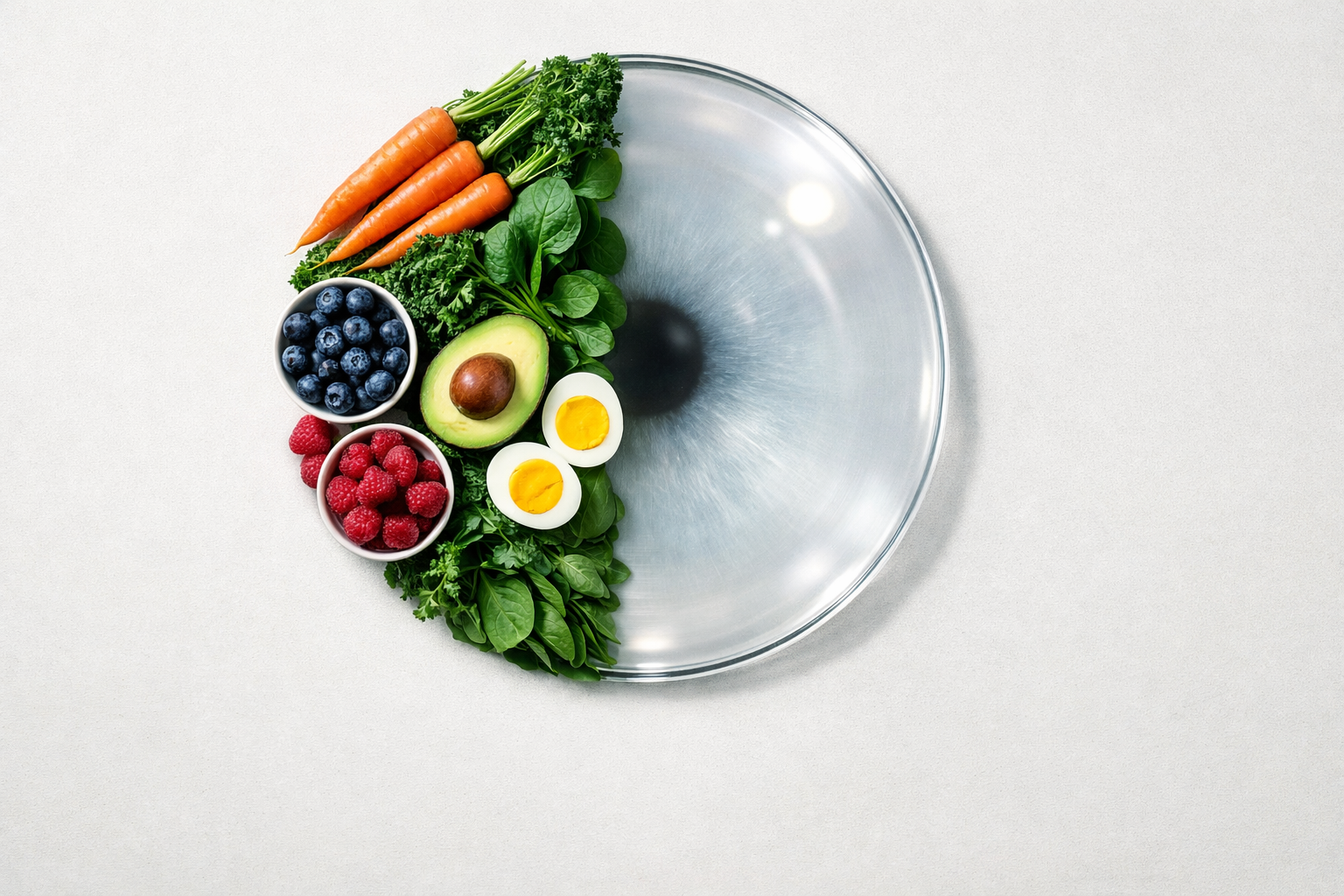
Daily plate color strategy
Adding a variety of colours to your plate helps diversify nutrients and supports eye health. Carotenoids – the compounds concentrated in retinal tissues – are responsible for the colors of fruits and vegetables.
You can arrange your healthy plate that consists of:
- Orange foods like carrots, sweet potatoes, and mangoes are rich in beta-carotene.
- Leafy green foods, which are rich in lutein and zeaxanthin.
- Berries are rich in antioxidants.
Nutrition and cataracts
When cells are exposed to oxidative stress, cataracts are expected. Antioxidants such as Vitamins C and E can help reduce the risk of cataracts.
Research suggests that people who take multivitamins are at lower risk of cataracts. However, the reason remains unclear.
Do you need supplements?
While natural foods are always the best, some people need supplements.
Foods that may harm Vision
Some foods that harm heart health may also affect eye health. Taking care of heart health and metabolism is vital to maintaining good eyesight.
These foods are:
- Saturated fat in processed meats.
- High sodium.
- Increased sugar.
- Refined carbohydrates.
- Fried foods.
- Excessive alcohol consumption.
Conclusion
One of the best ways to ensure good eyesight in your later years is to maintain a colourful, varied diet. While it is impossible to completely protect yourself from eye diseases through diet, including more natural foods with antioxidant properties, carotenoids, omega-3 fatty acids, and minerals can help reduce risk.
To improve your preventive care and track your health regularly, use the iDoc devices to evaluate your vital signs and monitor your health in the app.