How to Enjoy Ramadan Sweets Without Harming Your Health?
Ramadan is a good opportunity to reset not only your mind but also your spirit. Fasting helps you to maintain a healthy lifestyle and aids in weight loss. However, it is crucial to avoid excessive intake of sweets and sugars to avoid weight gain and stay healthy.
In Ramadan, sleep patterns change significantly due to the altered routine. As a result, the level of physical activity also decreases. Therefore, it is crucial to be cautious about the food you consume to avoid any potential health issues due to the high-calorie content, especially sweets that are a part of every Ramadan celebration.
Why do we crave sugar more after Iftar?
Ramadan desserts like kunafa and qatayef evoke the spirit of the holy month, as they are a symbol of the positive spirit of this month.
Experts believe that the urge to consume sweets after Iftar increases due to the physiological changes that occur in the body.
After long hours of fasting, people tend to start their iftar with fast-digesting carbohydrates like rice, white bread, and sweet desserts with syrups. This causes an immediate increase in their blood sugar levels.
To control the increase in blood sugar levels, the pancreas releases large amounts of insulin into the bloodstream to bring the sugar levels back to normal. This causes a sudden drop in blood sugar levels immediately after the increase.
Risks of a sugar-heavy Iftar
People tend to consume large amounts of sugar and other calorie-rich foods during iftar. This can cause an increase in their total calorie intake without providing any nutrition.
Experts warn that if people continue with these unhealthy food habits during iftar, they may cause more health problems such as obesity, tooth decay, and other diseases like heart problems and diabetes.
The body becomes more sensitive to changes in blood sugar levels after long hours of fasting. A sudden increase in blood sugar can cause an imbalance in the body’s metabolism.
Sugary drinks can also cause a sudden rise in blood sugar levels, followed by a sudden drop, which may cause fatigue, drowsiness, and low energy levels.
Eating huge amounts of food in a short time can cause various gastrointestinal disorders like bloating, heartburn, and indigestion.
Best way to break fast without body strain
Eating a balanced Iftar meal helps regulate blood sugar levels and minimizes the chances of overeating during the following meals.
Start with dates and water
Breaking the fast with dates is an old tradition. Besides being the best way to break the fast, eating dates is a healthy habit as well. Dates contain fibers, sugars, and nutrients that are essential for the body and provide instant energy for the body.
Experts recommend that a person should have one or two dates with water or fruit. This will help the body gradually change from fasting to eating and reduce the level of hunger.
Take your meals slowly and give time for digestion
The stomach takes time to adjust after fasting and starts the digestion of the consumed meals. Thus, the meals should be taken slowly in order to avoid heartburn and stomach upsets.
Some nutritionists recommend that you eat dates with water first, followed by a short rest to conduct the Maghrib prayer before resuming your food. This helps the body to recognize that food intake has begun and adapt.
Why avoid dessert immediately after Iftar?
Consuming desserts immediately after the main meals can increase blood sugar levels and put pressure on the digestive system. So, it is advisable to wait for one to two hours after the Iftar meal before consuming desserts.
Components of a healthy Iftar
A balanced meal should comprise different food groups to give the body the needed fibers, protein, and carbohydrates.
Experts recommend dividing the dish as follows:
- Half the plate is filled with vegetables or a salad.
- A quarter of the plate is filled with protein-rich foods such as chicken, fish, legumes, or meat.
- A quarter of the plate is filled with carbohydrates such as rice, grains, or bread.
How can you enjoy sweets without harming your health?
According to the WHO, an adult should take less than 12 teaspoons of free sugar daily. However, for additional health benefits, the amount should be less than 6 teaspoons.
Free sugar includes those in desserts, sweetened drinks, processed foods, honey, syrups, and fruit juices, and this is very different from those in natural fruits.
It is highly recommended to avoid syrup-soaked desserts and consume them only once or twice a week during Ramadan.
It is also recommended to avoid consuming soda drinks because a single may contain about 10 teaspoons of sugar.
Healthy dessert options during Ramadan
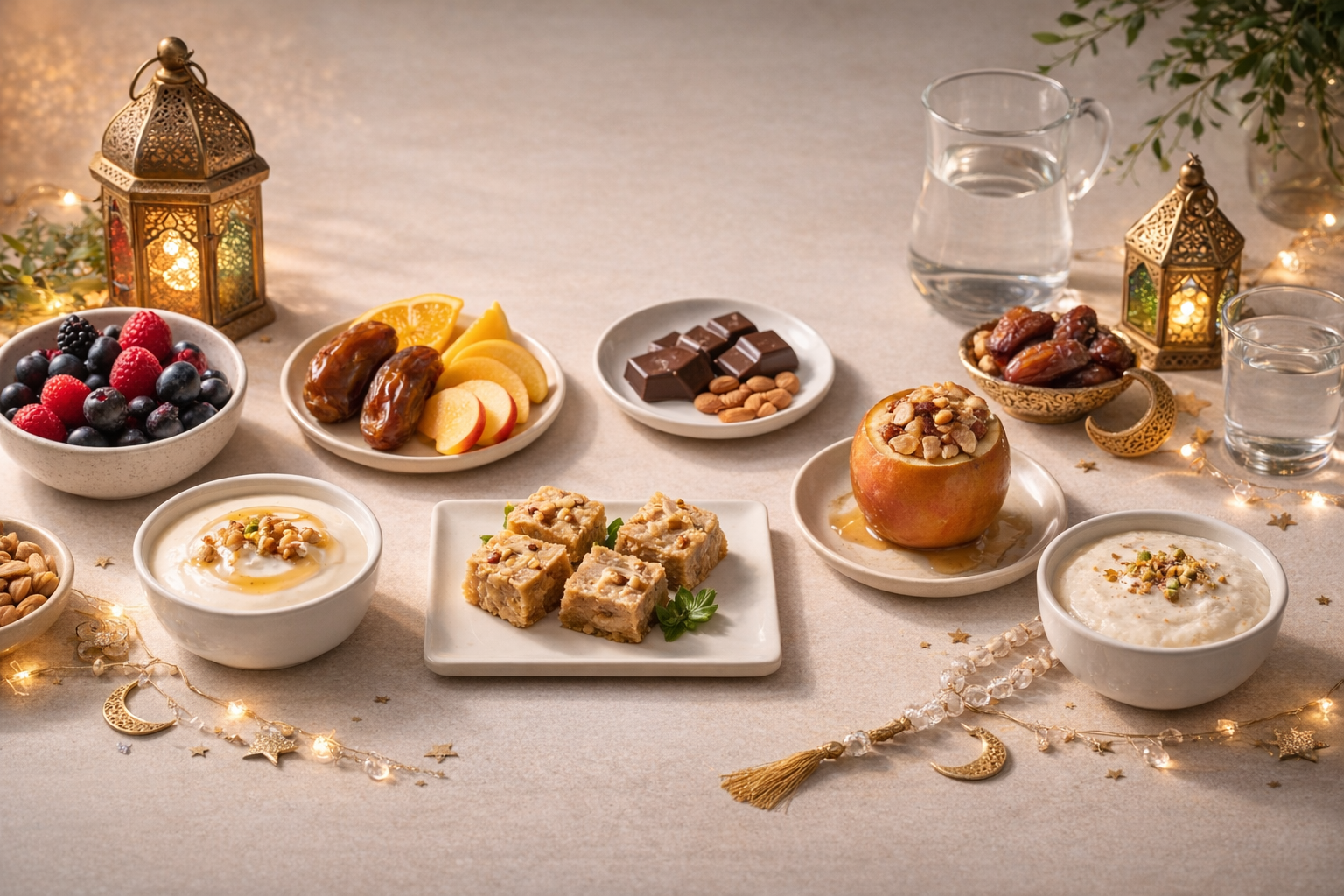
You can replace heavy and sugary desserts with light and healthy alternatives while still enjoying a sweet taste. Some healthy alternatives include:
- Fresh fruits.
- Yoghurt with honey.
- A small portion of dark chocolate.
- Desserts made of milk, such as custard and rice pudding and custard.
- Baked apples with cinnamon and nuts.
- Baking traditional sweets to be healthy instead of frying and reducing the amount of syrup.
Mistakes to avoid when eating sweets in Ramadan
Some mistakes may cause a sudden spike in blood sugar levels and distress the digestive system. They include:
- Eating dessert immediately after Iftar.
- Eating different types of sweets at once.
- Eating sweets daily.
- Eating fried and syrup-soaked desserts.
How to avoid weight gain during Ramadan
Maintaining a healthy lifestyle during the holy month can be done through the following simple tips:
- Control your serving size.
- Avoid excessive intake of sugar in tea or coffee.
- Eat fruits instead of sweet dishes.
- Avoid fried foods.
- Eat lean meat.
- Eat at least five servings of fruits and vegetables every day.
- Drink a lot of water between Iftar and Suhoor meals (at least 2-3 liters).
- Perform light physical exercises after the Iftar meal.
Who should limit sweets during Ramadan?
Limiting the intake of sweets or avoiding them altogether and using alternatives such as fruits or sweet dishes low in sugar content can be highly beneficial for the following persons:
- People with diabetes.
- People who want to reduce their weight.
- People with digestive problems.
- People with blood sugar level problems.
Conclusion
Ramadan can be a blessing for your health and your soul. By adopting a healthy lifestyle, you can enjoy the sweet dishes without compromising your health. Simple habits such as starting the Iftar meal with dates and water, eating slowly, and controlling serving size can help in maintaining your energy levels and avoiding weight gain.
If you wish to maintain a balanced diet, get your special diet and lifestyle plan for Ramadan from the iDoc app.